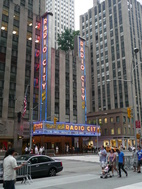
Concert in your area for Folk & Blues, Rock, Indie & Alt, Country, Funk & Soul, Jazz, Pop, and R&B.
Born and raised in Louisiana in the 1930s, Buddy took to music quickly, initially playing with a homemade Diddley bow until someone gifted him a Harmony acoustic guitar which is now considered an important artefact in the history of rock and roll.
Buddy moved to Chicago in 1957 and began to be influenced by the likes of Muddy Waters, developing his Chicago blues style during this time. Buddy signed a deal with Chess records in 1959 however many feel the label’s conservative tendencies held Buddy back in his formative years. Whilst his live performances were known for their passion and ferocity, Chess label founder described Guy’s playing as noise and did not release it as it should have been.
During this time however, Buddy’s playing had had a profound effect on a number of musicians we now count among the greatest guitarists of all time. Jeff Beck and Eric Clapton both took influence from Guy as they began their careers. This notoriety amongst the guitarist elite helped Guy to experience a career boom in the blues revival period of the late 80s and early 90s, one that has continued ever since.
In 2005 Buddy was inducted to the Rock and Roll hall of fame by Eric Clapton and BB King. With everyone from Slash to the Rolling Stones singing Buddy’s praises, he has had a powerful impact on rock and roll and music as a whole that will be remembered for years to come.
Eric Clapton first made a name for himself as a guitarist through playing alongside British rock group, the Yardbirds, before then joining John Mayall’s Bluesbreakers, time during which he penned some of the finest guitar work of the 60s, proving himself one of the best guitarists to arise out of the UK. Forming the supergroup Cream, with Ginger Baker and Jack Bruce, Clapton helped set the tone for the rocking 60s, with his blues-heavy rock. Yet whilst being recognised as one of the best guitarists of his generation, his solo career was slow to start off, taking a number of years before his first solo effort arrived.
After achieving a Top 40 hit with “After Midnight,” Clapton recorded a landmark album with Derek & the Dominoes, “Layla and Other Assorted Love Songs” in 1970. A period of inactivity followed due to drug addiction but in 1974, with the release of “461 Ocean Boulevard,” Clapton topped the charts, bolstered by the successful number one single, “I Shot the Sheriff,” a cover of Bob Marley’s classic tune. Clapton continued to release hit after hit as the decade progressed, finding success with his 1977 album, “Slowhand,” which featured the singles “Cocaine,” “After Midnight” and “Lay Down Sally,” selling in the millions. Further Top Ten hits followed with 1978’s “Backless” and the live album, “Just One Night,” which displayed Clapton’s guitar prowess.
Clapton’s success quietened in the 80s, although in 1989, he returned to form with “Journeyman.” After the tragic death of his son in 1991, Clapton recorded the gut-wrenching song “Tears in Heaven,” which went on to become a huge hit. The guitarist also found widespread acclaim for his appearance on MTV’s Unplugged series in 1992, turning in some beautiful acoustic blues on an album that would become one of his biggest selling. Clapton returned to his blues roots in the 90s, with the hugely successful “From the Cradle,” before then releasing an album new material in 1998, with “Pilgrim.”
Clapton continue his exploration of his blues roots through a collaborative album with B.B. King in 2000, as well as creating “Me and Mr. Johnson” in 2004, an album in honour of the legendary Delta Blues guitarist, Robert Johnson. A collaborative effort with longtime idol, JJ Cale, 2006’s “The Road to Escondido” helped show a different side to Clapton, with Clapton continuing to collaborate with legendary artists throughout the decade, featured on several live albums.
Clapton set up his own imprint, Bushbranch, releasing the Top Ten album, “Old Sock,” in 2013, which collected several old songs that Clapton loved dearly. In respect of the late J.J. Cale, Clapton recorded a tribute album, “The Breeze: An Appreciation of J.J. Cale,” in 2014, which featured a number of artists including Willie Nelson, John Mayer, Tom Petty and Mark Knopfler.
Growing up playing the trumpet yet listening to hip-hop, Aloe Blacc acquired a diverse range of musical influences and inspirations. In the mid-90s, Aloe Blacc fused his love of both genres by forming Emanon, an indie rap collaboration with rap producer Exile. The pair released a set of mix tapes which combined jazz samples with hip hop beats. Emanon became a staple on the underground rap circuit, and the pair released three albums together between 2001 and 2005.
Determined to find success as a solo artist, Aloe Blacc released two EPs in 2003 and 2014. Both releases caught the attention of industry executives and Aloe Blacc was signed to Stone’s Throw Records in 2006. Aloe Blacc released “Shine Through” in 2006 and the album attracted significant attention and multiple positive reviews from critics across the US. Aloe Blacc’s song writing abilities were noted continually and critics expressed their excitement for his future work. Despite the critical success of this first album, “Shine Through” failed to chart.
In spite of this, commercial success was soon to come with Aloe Blacc’s second album “Good Things” which was released in 2010. The album went to number 41 on the US R&B chart and peaked at number 8 on the UK album chart. The standout track from this album was “I Need a Dollar”. The track won the singer attention from all corners of the globe and found top ten success in multiple countries, including hitting the number 2 spot in the UK. The single was so successful that it was eventually certified double platinum and won the singer performance opportunities at festivals such as Glastonbury and Lollapalooza.
Hot on the heels of this success, Aloe Blacc teamed up with Swedish DJ Avicii to co-write the song “Wake Me Up”. The track became a megahit worldwide and went to number one in over 100 countries, as well as earning the achievement of being the fastest selling single in the UK that year after over 250,000 copies were sold in the first week of its release. The success of this single propelled Aloe Blacc’s next studio album up the charts where it hit the number four spot in the US (the first time Aloe Blacc had charted on the US Billboard Hot 200) and reached number five in the UK.
Joe Bonamassa’s career blossomed at a young age and by the time he was 12 years old he was already working as the opening act for the legendary blues guitarist, B.B. King. Although Bonamassa respected prominent blues musicians like T-Bone Walker and Robert Johnson, he was more inclined to listen to Eric Clapton, Jeff Beck, or Rory Gallagher. This influence can be conveyed by Bonamassa’s more rock and roll approach to making blues music.
In 2000 Joe Bonamassa released his debut album “A New Day Yesterday”, which was produced by the legendary Tom Dowd who was known for recording notable artists such as Eric Clapton, Lynyrd Skynyrd, and Rod Stewart. The debut album received favorable reviews and reached the No. 9 spot on the US Billboard Top Blues Albums. The album also featured several cover songs by many of Bonamassa’s favorite artists such as Jethro Tull, Free, and Albert King. Bonamassa released his second studio album “So, It’s Like That” on his record label, J&R Adventures. The album is one of Bonamassa’s few albums to feature all original material and did successful on the charts reaching the No. 1 slot on the US Billboard Top Blues Albums.
Joe Bonamassa is an incredibly prolific songwriter releasing an album almost every year. Each album that Bonamassa releases seems to gain him more success and popularity. His 2014 album “Different Shades of Blue” reached the No. 8 spot on the US Billboard charts and featured nearly all original material. Bonamassa is usually fond of performing cover songs and the list of songs he covers is highly diverse. He has covered unique artists such as Tom Waits, Leonard Cohen, Jimi Hendrix, Al Green, and Barbra Streisand. Apart from his solo studio albums, Bonamassa has also released collaboration albums with singer-songwriter Beth Hart as well as released a variety of live albums.
Perhaps the reason that there are so many live albums and live video albums of Joe Bonamassa is because he is at his best when performing live. A normal touring year for Bonamassa is around 200 shows per year and many of these shows sell out. Bonamassa has played a multitude of unique venues ranging from large music festivals to the Vienna Opera House. His live shows convey his intricate techniques that bring the traditional style of blues music to life in its rawest form.
Gary Clark Jr. started playing guitar aged twelve. He was born and raised in Austin playing humble gigs throughout his adolescence, before meeting promoter, Clifford Antone, who is the proprietor of the Austin music club Antone’s. Antone has in the past given a platform to Stevie Ray Vaughan, and Jimmy Vaughan. Clark’s career began to snowball and started to ascend in the Texas rock & roll scene. He has experimented with various styles over the course of his career from hip-hop to country. He developed his sound using trademarks such as an extremely fuzzy guitar sound alongside his smooth vocal style.
It was Clark’s third studio album “Blak and Blu” released through Warner Bros on October 22nd 2012, that catapulted him to a new level of success, reaching number 6 in the US, The Netherlands and New Zealand. It also charted in Australia, France, German and the UK.
It was in April 2011 that Rolling Stone declared Clark, “Best Young Gun” in its “Best of Rock” issue. His song, “Bright Lights” can be heard in the video game Max Payne 3, in the premiere episode of House of Lies and the movie Think Like a Man. His song “Don’t Owe You a Thang” made it into Need for Speed: The Run.
He has played at numerous festivals such as Coachella, JazzFest, Hard Rock Calling, Lollapalooza and more. He won eight awards at the 31st annual Austin Music Awards for 2012-2013, for Band of the Year, Musician of the Year, Song of the Year – “Ain’t Messin Round”, Album of the Year, Electric Guitarist of the Year, Songwriter of the Year, Blues/Soul/Funk Artist of the Year and Male Vocalist of the Year. On January 26th 2014, Clark won the Grammy Award for Best traditional R&B performance, for his song “Please Come Home”
Robert Cray is the natural successor to practically every blues legend there is. Who may owe his career to the likes of Buddy Guy, Albert Collins, and Freddie King but is a touchstone in his own right, and a trailblazer for the modern day likes of Gary Clark Jr, among many others. Cray picked up the guitar in his early teens and, inspired by the legends that he would regularly see perform in the blues clubs of his native Georgia, Cray decided to form a band when he was 20 years old. His first band cut their teeth playing house parties and frat houses all the way up and down the west coast anywhere that would have them. It wasn’t until in the late seventies that Cray felt that he had the experience necessary to strike out on his own, and he did just that by forming the Robbie Cray Band.
The new project hit the road immediately and started building up a devoted local following. A following that even led to a brief, non-speaking appearance in John Belushi’s comedy classic “National Lampoon’s Animal House” as a bass player in the fictional band Otis Day and the Knights. However, true success wouldn’t knock on Cray’s door until 1982, when he secured a record deal with Mercury Records, shortly after the release of his debut album “Who’s Been Talkin’”. His first couple of albums there tided him along fine, but it was his 1986 album “Strong Pretender” that broke him into the mainstream with a top 15 placing on the Billboard 200, a crossover hit in the form of “Smokin’ Gun” and a Grammy nomination the very next year.
Having proved that he could take the blues to the upper end of the charts, Robert Cray has had no obligations since, and has just produced some of the best and most truthful soul-blues of the late eighties and nineties. He’s opened for Clapton. He performed “Sweet Home Chicago” with the one and only Stevie Ray Vaughn at the great man’s last ever concert before his tragic death in 1990. To this day, every studio album of new material he’s released since 1995 has debuted in the top five of the Billboard Blues charts. Needless to say, Cray is a man who’s done it all, and still leaves it all onstage night after night after night, because his passion for the blues burns just as bright as it did when he started. Highly recommended.
Growing up on a musical diet of his father’s blues, soul and rock record collection, Shepherd began playing guitar age seven after meeting Stevie Ray Vaughan. He learned his craft through stopping and starting old cassette tapes, and teaching himself one note at a time, later playing along with his father’s records. At the age of 13, Shepherd was invited to play on stage with bluesman Brian Lee for a period of several hours, after which he was determined to pursue a career in music.
Using his father’s know-how and industry contacts, Shepherd signed with major-label Giant Records, who released his debut album “Ledbetter Heights” in 1995. The album was instantly popular, sold over half-a-million copies by early 1996 and exposed the singer-songwriter to a wave of new audiences. Combining the southern blues of Texas and Louisiana, as well as acoustic and rockin’ blues, “Ledbetter Heights” earned commercial success that’s known to be particularly rare within the blues genre.
In 1998, Shepherd's sophomore album “Trouble Is…” arrived, earning the songwriter a Grammy nomination, and was followed by “Live On” in 1999. Both albums have since been platinum certified and topped the U.S. Blues Chart. The album “The Place You’re In” was released in 2004 through Reprise Records, and was succeeded by the album and film “10 Days Out: Blues from the Backroads”, which documents several veteran blues players in the American south.
Shepherd’s first live album “Live! in Chicago” (2010) was the guitarist’s fourth album to hit the top spot on the U.S. Blues Chart and even made inroads into the U.S. Rock Chart. The same year Shepherd appeared with Jimmy Fallon’s house band for an entire show, playing the same stratocaster Jimi Hendrix had played at Woodstock.
Returning to the studio the songwriter and guitarist released his first proper album in seven years, 2011’s “How I Go”. It an attempt to capture some of the magic of his earlier albums, Shepherd re-enlisted the help of vocalist Noah Hunt and Talking Head’s keyboardist Jerry Harrison. “Goin’ Home” was released in 2014 and proved to be the musician’s highest charting album, reaching No. 25 on the Billboard 200 and again topping the U.S. Blues Chart.
“Heaven is lying at Buddy Guy's feet while listening to him play guitar” Jimi Hendrix. Even if you do not love the blues, but at minimum have respect for where rock and roll inherited its roots, you have to see Buddy Guy. He is an original. He’s the real deal. He learned from Muddy Waters, Howlin’ Wolf, Willie Dixon, John Lee Hooker and all the old masters who are long gone. Seeing Buddy like is both an homage to the past, but also a taste of the blues here and now. This is the guitarist that influenced Eric Clapton, Slash, Jeff Beck, Jimmy Page, Ronnie Wood, Keith Richards, Stevie Ray Vaughn, Billy Gibbons and many more. Buddy can finesse his Stratocaster to any sounds from any position at anytime. Any remiss I have for never having seen Jimi live is quickly subsided knowing that Jimi deeply influenced by the great Buddy Guy.
Expecting any number of classic blues or rock numbers such as ‘Messin’ with the Kid’, Voodoo Child’ or ‘Hoochie, Choochie Man’,
I’ve now seen Buddy play 5 times in the past two years (yea, I was late to the game here), and each time completely lost in his trance. Entertaining, funnier than hell, but most importantly weaving guitar licks beyond moral man.
CBE Eric Clapton is considered to be the UK's greatest guitarists by a great number of people. Having achieving success with both his former bands Cream and The Yardbirds as well as a celebrated solo career, the demand to see this icon of British music is still very much there. A frequent visitor to London's ambient Royal Albert Hall, Clapton is once again ready to thrill and amaze his audience.
Having worked as a musician since 1962 he shows no sign of losing those indescribable skills with his trusty instrument. His set lists tend to reach mainly from his solo career, beginning with a poignant rendition of 'Hello Old Friend' which Clapton delivers with such sincerity that each audience member feel it is personal to them. He also covers some of his favourite musicians including The Wailers, Hop Wilson and Robert Johnson. He re-interprets these classic tracks in his own way though with his brilliant supporting band.
The audience remains engaged throughout partly due to Clapton sneaking in fan favourites such as 'Tears In Heaven' and also due to watching this incredible artist working his guitar. His live show proves the reputation profusely.
No words need to be said when you can come out on the stage and coax your guitar into a wave of beautiful sounds.
John Mayer was like a breath of fresh air when I heard his "No Room for Squares" album in 2002 – I still remember being in a friend's car on the way to a gig we were playing at and hearing the incredible opening guitar riff on "Neon". We must have played that track 20 times on that car journey!
Fast forward five years to the point where I'm stood watching him sing Tom Petty's incredible "Free Fallin'" live in concert. An absolute must-listen-to for people of all ages. It's a timeless song that will never grow old, and when you see John play that song in concert, it's as though the notes are so crisp and unwavering. This one unfeasibly talented man and his guitar have the audience in the palm of his hand, hanging on every syllable.
I've seen John 11 times now – including that occasion. These days his songs are so well known that when he is singing, you can see the crowd swaying from side to side singing every word. He's such an energetic performer; he doesn't just stand there and sing, he really rocks out swinging his guitar around. He must have sung these words a hundred times, but when you're there watching him, they sound as fresh and new to him as if he just wrote the song on the spot. I love how he never plays songs the way you expect them: he's always playing about with the rhythms, extending out the solos – you're really getting the live experience when he plays, not just the album version. He's really generous towards the other guys in the band too, and I'm sure they must be honored to play with such an incredible musician.
If (God forbid) you haven't yet heard of John Mayer and you need some persuading, he's a Grammy winner, he has collaborated with the likes of B.B. King and Eric Clapton, and he's got his own intensely creative style. John Mayer really takes his concerts to the next level by wowing audiences of young and old all the way through. Go see him, you'll be blown away!
Music, like many things can be a so-called “man’s world,” but there are many women who are defying that idea. And Susan Tedeschi is just one of them.
The Boston singer, songwriter and excellent guitar player has music coursing through her veins in the form of blues, rock and blue eyed soul. Graduating with a degree in musical composition from the renowned Berklee School of Music, it was during her years at the school that she started to dabble in the blues world, combining her classically trained musical skills and the new improvisational genre to find a niche that is now what Tedeschi is known for today.
Releasing 10 albums including 2013’s ‘Made Up Mind,’ she has been touring around with her band as well as the one she has with her husband Derek Trucks called the Tedeschi Trucks Band for years now.
My first introduction to Tedeschi’s expertise was when she did a guest spot in Soulive’s residency at the Brooklyn Bowl in New York City. With the local soul band joining forces with hers, she casually took the mic, plugged in her electric guitar and magic just happened. With her Janis Joplin-like vocals and Bonnie Rait-esque guitar playing, she quickly entranced everyone in the room, who instantly started dancing. But no matter how much the crowd cheered and hollered, Tedeschi never lost her cool and would calmly thank everyone for coming out -- something that juxtaposed the beast that would wail on the guitar and mic.
We saw Jon Batste in Louisville, Ky at Bourbon and Beyond
Festival. I can only say he is amazing. I already have two albums and only wished he could have played longer. He is
the epitome of a southern gentleman. He said he loves all of us. I say I love him!
I had the AMAZING opportunity to attend South by Southwest (SXSW) 2014 in Austin, TX for the first time, and boy was it an awesome experience!! With hundreds and possibly thousands of events to choose from throughout the week (many of them free), it was an overwhelmingly exciting event to be a part of. On Wednesday, March 12, I saw Aloe Blacc perform at Haggar Clothing’s “Slacks are Back” event at Clive Bar. With my short height, I was lucky enough to be in the front row to see his performance up close & personally. The first thing I liked about his team and band was that they made the sound check a part of the show. His “host” if you will (a tall, skinny and very attractive Caucasian man) came out and used the sound check to get the crowd ready for Aloe Blacc and his band to come out and perform. Such a clever use of sound check time (and that man could sing too!) When Aloe finally came out, it was smooth grooves and good vibes the rest of the night. He of course performed crowd favorites including “I Need a Dollar” and “The Man” (made even more famous by the “Beats by Dre” commercial series), but my personal favorite was “You Make Me Smile” – a sweet & feel-good R&B song that I had never heard before, but could listen to on repeat all day and night. He closed out the show with the ever-popular “Wake Me Up,” which sent the audience home happy and satisfied from a wonderful show.
Joe Bonamassa's claim to fame is his virtuosic ability to deliver face-melting blues rock in an age where the charts are dominated by pop. And that ability seamlessly translates well into his live performance. The subdued lighting of the venue was the perfect complement to the music; you've got your "bluesy lights" on as Bonamassa comes out and immediately launches into the beautiful, soaring epic ballad "Mountain Time." As the night progressed, you were treated to an absolute master's guitar clinic. Bonamassa was seemingly capable in flawlessly executing every guitar technique in the book. You've got your blistering technical solos, twangy slide guitar, crunching riffs, extensive jams with the band, lush acoustic numbers, and on and on.
Fans of Led Zeppelin and Eric Clapton will especially find lots to love at a Joe Bonamassa concert. Bonamassa channels the in-your-face hard rock crunch of the former while displaying the raw blues sensibilities of the latter. The setlists are crafted expertly, to make sure you're constantly alternating between rocking out and being moved by a melancholy number. Two highlights for me were a faithful rendition of Zeppelin's heart-wrenching rocker "Tea for One" and the moody, cascading blues of "Sloe Gin." It was truly a refreshing experience to see that blues-rock is not a dead art form, and that Joe Bonamassa is capable of keeping live guitar-driven rock relevant.